Bajo Peñas
The Sierra Ferrera, crowned by the Peña Montañesa, as well as its south-facing slopes, are home to numerous beautiful corners. The towns that are there are called “Bajo Peñas.”
Routes can be made starting from L`Aínsa (in the direction of Pueyo de Araguás) or starting from Escalona (taking a detour on the Laspuña-Ceresa highway, already close to the latter town). They are quiet villages, which few visit, surrounded by the Sierra Ferrera cliffs that give them a beautiful landscape as a backdrop. Among the places to visit, the following stand out:
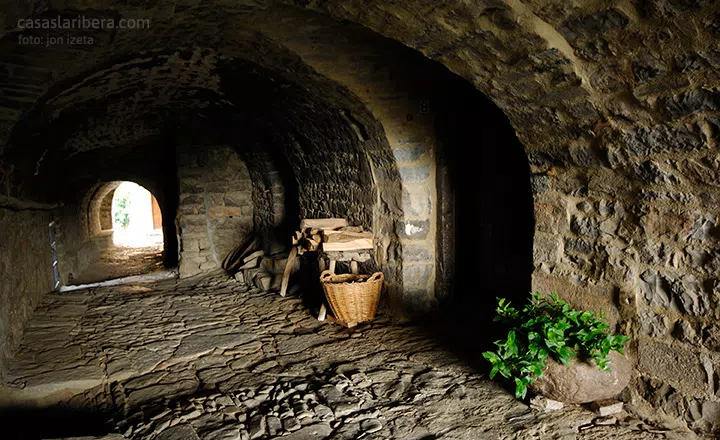
El Pueyo de Aragüás: It is an elongated center on a hill, with a single street where the beautiful mansions appear. Its structure and constructions date back to the 16th century.
San Beturián (or San Victorián). It is an old monastery located in a place of great beauty, under the same cliffs as La Peña Montañesa. Its greatest interest lies in its historical value, being probably one of the oldest monasteries in our country. Its origins date back to the 5th century, when Saint Beturián came to preach in these lands. For centuries it governed the religious, cultural and even economic life of this region and other neighboring areas. Some remains of the buildings from the 11th and 12th centuries are preserved, but it underwent many renovations, especially the one from the 18th century (to which the church belongs). Until the 1950s, it remained in good condition, but massive depopulation and poor management of the building led to its ruin. Part of his altarpieces are in Barbastro and neighboring towns, the choir stalls in Boltaña and many other works disappeared. Finally, a few years ago restoration work began, although there is still a long way to go before it can return to its former splendor.
San Juan de Toledo de La Nata. This center is accessed from the N-“”” that leads from L’Aínsa to Campo, past Fuendecampo. On the access road we cross Atiart, an unpopulated but interesting area. San Juan stands out for its beautiful church, built in the 11th century. It has a curious clover-shaped apse and its tower is equally notable, as are its 16th century paintings, all perfectly restored. But, in addition to its church, San Juan also stands out for its sunny landscape of fields and also oak trees lying under the rocks.
Other villages of interest are Aragüás, with the Landlord's house, Torrelisa and La Mula.
In Casas La Ribera. Ordesa we will be happy to offer you more details of the routes.
Texts: Joaquín Guerrero.
Any reproduction is prohibited without written permission from the company for the purposes of article 32.1, second paragraph, of the Intellectual Property Law.